
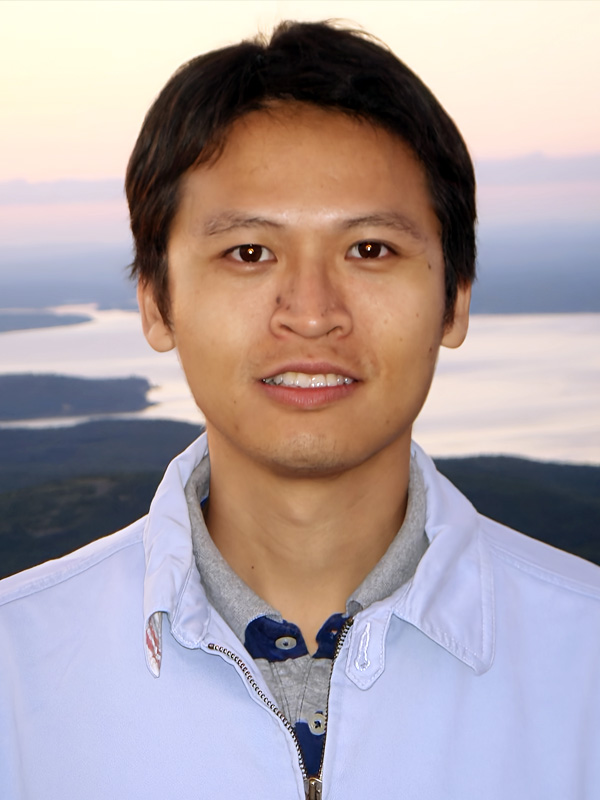
Single-cell RNA sequencing (scRNA-seq) promises to provide high resolution of cellular differences. However, the analysis of scRNA-seq data remains a statistical and computational challenge, due to the pervasive dropout events obscuring the high dimensional data matrix with prevailing ‘false’ zero count observations. Furthermore, subsequent differential expression analysis after clustering incurs the so-called “double use of data" problem, which will compromise type 1 error control for standard statistical tests. In this talk, I will introduce model-based deep autoencoders to address these issues. The proposed approaches leverage the most recent developments in feature representation learning in deep learning and feature selection in statistical learning, as well as prior information from domain scientists. Extensive experiments on both simulated and real datasets demonstrate that the proposed methods can boost clustering performance significantly while effectively filtering out most irrelevant genes. Our methods can generate more biologically meaningful clusters with enhanced interpretability as desired by biologists.
Zhi Wei (IEEE Fellow) received the B.S. degree from Wuhan University, and the Ph.D. degree from the University of Pennsylvania, USA, in 2008. He is currently a Professor of computer science and statistics (joint appointment) with the New Jersey Institute of Technology. He has authored or coauthored more than 250 publications with 18,000 citations and H-index of 60. His research interests include statistical modeling, machine learning, and big data analytics. He has served as a PC Member for the IEEE ICDM, ACM SIGKDD, the IEEE Big Data, AAAI, and CIKM. He is an Editorial Board Member of the IEEE Internet of Things Journal, BMC Genomics, BMC Bioinformatics, PLOS ONE, and the IEEE Transactions on Computational Social Systems.
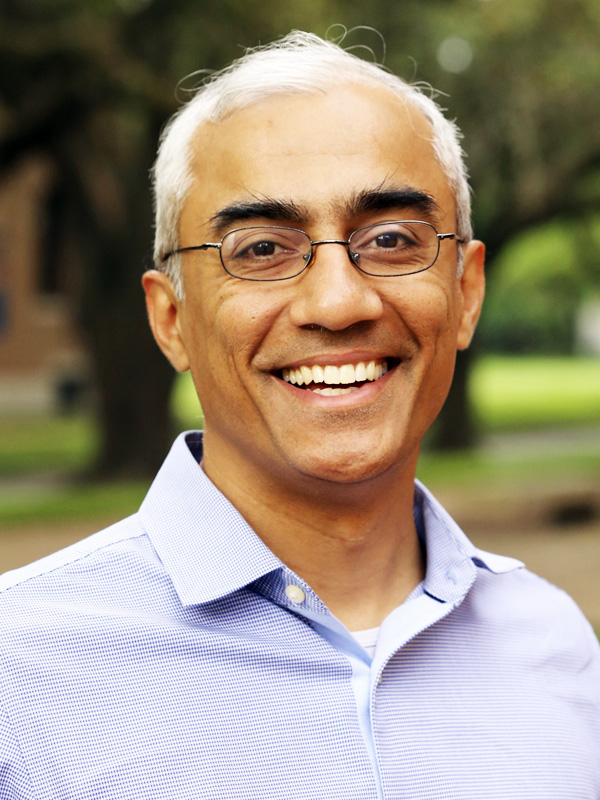
It is well-appreciated that our behaviors significantly impact our health. Many healthcare outcomes could improve if we could measure individual behaviors' impact on their health and use this quantitative understanding to guide future behavioral decisions. Behaviors can range from simple to quantify (e.g., physical activity) to vaguely defined and, hence, very challenging to quantify (e.g., socialization behaviors).
In this talk, we share examples from our research in measuring behaviors in different clinical contexts. Our work has delved into a large spectrum of research projects: (i) quantifying inhaler use to improve pulmonary outcomes, (ii) robust non-contact methods to measure physiological signals from cameras, (iii) measuring screen use to measure impact on pediatric health, (iv) health behaviors in diabetes and (v) sociability behaviors that impact mental health. We will share some general principles and highlight open challenges in measuring behavior and understanding its impact on health.
Ashu Sabharwal works in two research areas - digital health and wireless networks. In digital health, his research focuses on enabling new science and clinical translation to understand behavior-biology pathways. He has established the Rice Digital Health initiative. He is the lead of the NSF Expeditions in Computing project "see below the skin" (seebelowtheskin.org) and co-PI on NSF Engineering Research Center, PATHS-UP (pathsup.org). In wireless, his research interests are wireless theory, design, and large-scale deployed testbeds. He was one of the inventors of in-band full-duplex communications, a technology now used in communication standards. He founded the WARP project (warp.rice.edu), an open-source project used by 150+ research groups worldwide. He is currently leading several NSF-funded center-scale projects, notably Rice RENEW (renew-wireless.org), to develop an open-source software-defined massive MIMO wireless network platform. His work has led to multiple startups and products. He is a recipient of the 2017 IEEE Jack Neubauer Memorial Award, the 2018 IEEE Advances in Communications Award, the 2019 & 2021 ACM Test-of-time Awards, and the 2019 ACM MobiCom Community Contribution Award. He is a Fellow of IEEE, ACM, and the National Academy of Inventors.

Given a metric on n vertices including two prespecified endpoints, the path traveling salesman problem aims to find a shortest Hamiltonian path between these endpoints. Hoogeveen showed in 1991 that the celebrated Christofides-Serdyukov algorithm achieves an approximation ratio of 5/3 for this problem, which remained the best ratio known for 20 years. However, between 2012 and 2019, a series of advancements improved this ratio, ultimately revealing that the problem's approximability is almost equal to its circuit counterpart. In this talk, I will survey some of the key algorithmic ideas that enabled these improvements.
Hyung-Chan An is an Associate Professor and Department Chair of the Department of Computer Science and Engineering at Yonsei University. His primary research interests include online algorithms and combinatorial optimization. Prior to joining Yonsei, he was a postdoctoral researcher at Ecole Polytechnique Federale de Lausanne from 2012 to 2016, under the supervision of Ola Svensson and Aleksander Madry. He received his Ph.D. in Computer Science from Cornell University in 2012, where he was advised by David Shmoys and Robert Kleinberg. He holds a B.S. in Computer Science and Engineering from Seoul National University, obtained in 2006.